

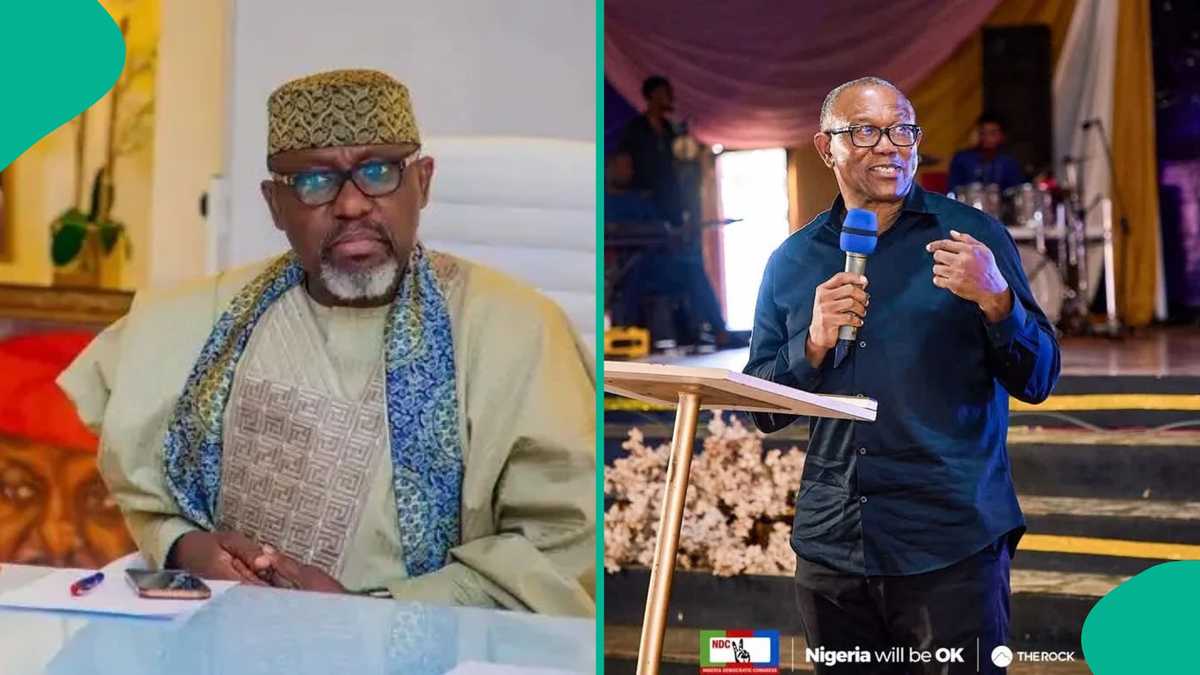
Rochas Okorocha warned on Thursday that the “peter obi gamble” of a single‑term, four‑year presidency being promoted by the Nigeria Democratic Congress (NDC) candidate could jeopardise the South East’s political future. Speaking on Channels Television’s Politics Today programme, the former Imo State governor challenged the viability of the proposal as the country edges toward the 2027 general elections.
Okorocha, who served as Imo governor from 2011 to 2019 and later as a senator for Imo West, used the televised interview to question the practicality of Obi’s governance model. He argued that a limited four‑year term would leave the nation with insufficient time to implement long‑term policies, especially in a region that has historically struggled for equitable development. “A gamble of this sort could destabilise the balance we have been trying to achieve for the South East,” he said, emphasizing the need for stability over experimentation.
Beyond the critique, Okorocha turned the discussion toward the upcoming electoral contest, urging his fellow Southerners to act with “calculated deliberation” when forming political alliances. He cautioned that hasty support for untested ideas might erode the region’s influence in Abuja. “The South East must be strategic, not impulsive,” he told the audience, underscoring the importance of aligning with parties and candidates that can deliver tangible benefits to the Igbo populace.
In the same breath, Okorocha threw his weight behind President Bola Tinubu’s bid for a second term in 2027. He noted that Tinubu, despite being from the north, had not acted against any Igbo interest during his first term, positioning him as a more reliable partner for the South East than the NDC’s newcomer. “Tinubu has not taken any action that harms an Igbo person; that makes him a safer bet for us,” he remarked, effectively signaling his support for the incumbent’s re‑election campaign.
Okorocha’s remarks carry added weight because both he and Peter Obi hail from the South East, a region that served as Obi’s stronghold in the 2023 presidential race. Obi, formerly of the African Democratic Congress (ADC), left that party on May 2, 2026, and was formally adopted as the NDC presidential candidate on May 29, 2026. His four‑year presidency proposal was introduced as part of a broader effort to differentiate the NDC from the ruling All Progressives Congress (APC) and the main opposition People’s Democratic Party (PDP).
The former governor’s comments also intersect with an ongoing legal battle that has kept him in the headlines. Earlier this year, Okorocha filed a suit at the Federal High Court in Abuja challenging the Independent National Electoral Commission’s (INEC) recognition of Hope Uzodimma as the APC’s Imo West senatorial candidate. Okorocha claimed he had won the May 18 APC primary with 150,780 votes, a figure that conflicted with the returning officer’s declaration of Uzodimma’s 230,464 votes. The case raises questions about whether Uzodimma, whose governorship runs until January 2028, can legally contest a 2027 senatorial seat. While the court’s decision remains pending, the dispute highlights the fraught nature of intra‑party politics in Imo State and the broader South East.
Political analysts note that Okorocha’s public endorsement of Tinubu could be a strategic move to cement his relevance in the 2027 race. By aligning himself with the incumbent president, he may hope to secure political appointments or influence for his supporters if Tinubu secures a second term. At the same time, his sharp critique of Obi’s proposal serves to fragment the opposition, potentially weakening the NDC’s appeal among undecided voters in the region.
For ordinary Nigerians, the debate over a four‑year single‑term presidency touches on deeper concerns about governance continuity and policy implementation. A shorter term could limit a president’s ability to see major projects, such as infrastructure, health, and education reforms, through to completion. Conversely, proponents argue that a fixed, non‑renewable term might curb the temptation for incumbents to cling to power, fostering a healthier democratic cycle. The South East, which has long felt marginalized in federal allocations, watches these arguments closely, aware that any shift in the national leadership model could reshape resource distribution.
Okorocha’s appearance on Politics Today also show the growing significance of television talk shows as platforms for political persuasion ahead of the 2027 elections. With voters increasingly tuning in to live debates, candidates and influencers are seizing the opportunity to frame narratives in real time. By labeling the NDC’s plan a “dangerous gamble,” Okorocha aims to plant doubt in the minds of South Eastern voters who may still be weighing their options between the incumbent APC and emerging alternatives.
The next steps in this unfolding political drama remain to be seen. Tinubu’s campaign is expected to intensify its outreach in the South East, seeking to convert Okorocha’s endorsement into tangible voter mobilisation. Meanwhile, the NDC is likely to double down on its messaging, emphasizing the benefits of a limited term as a safeguard against entrenched power. The pending court case involving Okorocha and Uzodimma could also influence public perception, especially if a ruling is delivered before the primary election calendar tightens.
As the 2027 election calendar draws nearer, the “peter obi gamble” will continue to be a focal point of discussion across media houses and political rallies. Whether Okorocha’s warnings resonate with the electorate or are dismissed as partisan rhetoric will shape the strategic calculations of parties vying for the coveted Aso Rock seat. The coming months will reveal how the South East balances the allure of fresh proposals against the perceived security of established alliances.