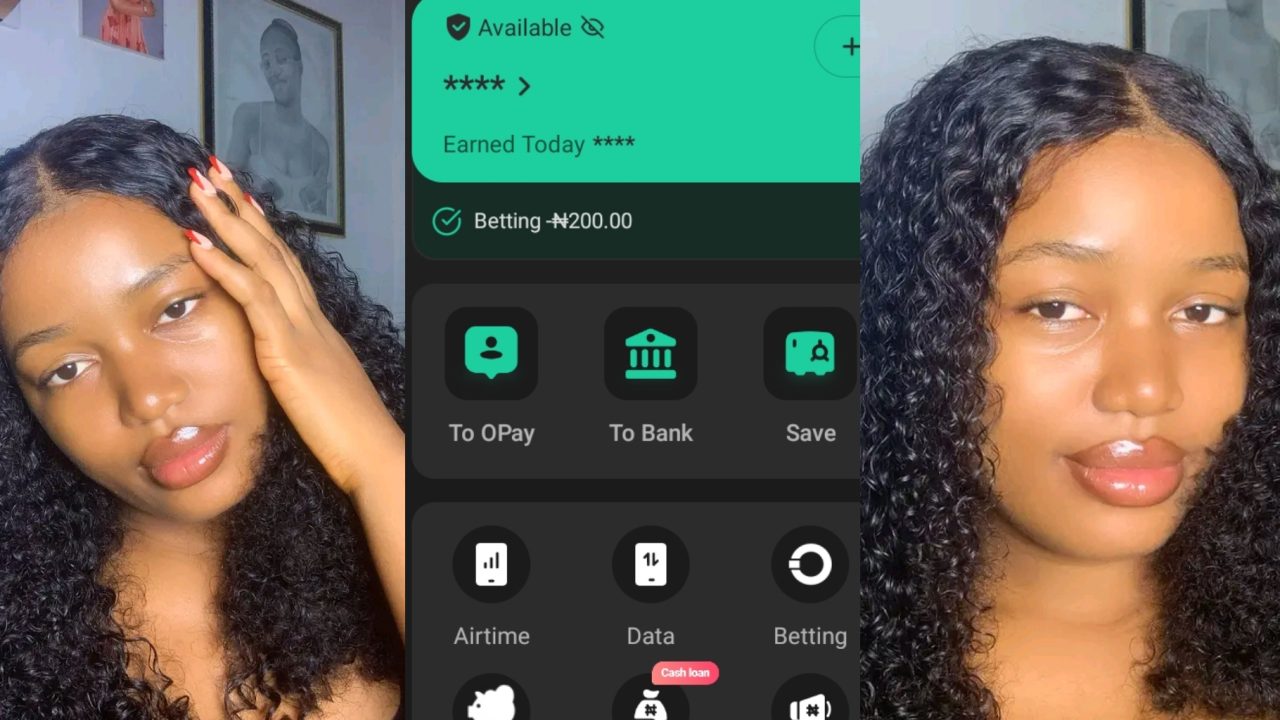
A Facebook post by Miracle Edet Okon, a Lagos‑based user, has drawn thousands of comments after she claimed to have opened her best friend’s Opay wallet and found a balance of ₦37 million. The post, shared on a personal timeline on Thursday, says the discovery came when she jokingly tried to send ₦5,000 to herself. “The day I decided to take my finance seriously was the day I jokingly wanted to transfer money from my best friend Opay to mine. I think 5K. Then I opened her Opay and saw 37M as her account balance,” she wrote.
Okon’s revelation quickly turned into a talking point across social media platforms. Users flooded the comment section with similar anecdotes, ranging from modest sums to eye‑popping figures. One commenter, Esther Madu, posted, “Saw 68m on my cowife account. We went to do some burial stuffs on the island. My eyes blur. Na they I put sugar mummy to her name.” Another, Jane Odukwe, recounted a “10m” balance, noting that her friend laughed when she mentioned it. The thread also featured remarks such as Maryan’s memory of “business estimates of 2 million to 6 million” and Favour’s succinct observation: “Best Friend?.The contrast is wildddddd”.
Why the story resonated
The buzz around the opay balance story taps into a broader curiosity about digital wallets in Nigeria. Since its launch in 2018, Opay has become one of the country’s most widely used mobile payment platforms, offering services from money transfers to bill payments and even crypto trading. Its rapid growth has been driven by a large unbanked population that relies on smartphones for everyday transactions. For many Nigerians, seeing a multi‑million‑naira balance on a friend’s phone is both astonishing and a reminder of how quickly wealth can accumulate, or appear to accumulate, in the digital age.
Financial experts note that while Opay accounts can hold large sums, most users keep modest amounts for daily needs. “The average Opay user typically maintains a balance sufficient for routine expenses, not tens of millions of naira,” said a senior analyst at a Lagos‑based fintech consultancy, who asked to remain unnamed. The analyst added that the platform’s security features, such as biometric login and PIN protection, are designed to prevent unauthorized access, although the ease of opening a friend’s app as described by Okon raises questions about shared device usage.
Public reaction and speculation
The thread’s rapid expansion highlighted a mix of disbelief, amusement, and concern. Some commenters expressed envy, while others questioned the authenticity of the claims. A user known as “TechGuruNG” wrote, “If it’s true, that’s a massive amount of cash sitting idle. Imagine the interest they could earn.” Others warned against assuming the figure is accurate, pointing out that screenshots can be edited and that Opay balances fluctuate with deposits and withdrawals.
In the wake of the post, Opay’s official Facebook page did not issue a direct response, but a customer service representative later replied to an inquiry on Twitter, stating, “We take account security seriously. Users should keep their login details private and report any suspicious activity.” The brief statement stopped short of confirming or denying any specific balances, adhering to the company’s usual policy of not commenting on individual accounts.
Context for ordinary Nigerians
For many Nigerians, the story show the dual reality of a cash‑driven economy increasingly intertwined with digital finance. While mobile wallets have expanded access to financial services, they also bring new risks. Sharing devices, as Okon apparently did, can expose friends or family members to each other’s financial information. The Central Bank of Nigeria has repeatedly urged users to protect their passwords and to enable two‑factor authentication where available.
Meanwhile, the allure of large, unseen sums fuels a culture of speculation on social media. Posts about sudden wealth, whether from lottery wins, crypto gains, or hidden bank balances, often go viral, reflecting both hope and skepticism among the public. The opay balance episode fits neatly into this pattern, offering a glimpse of what many imagine could be possible with a few clicks.
What comes next
As the conversation continues online, the focus is shifting from the sheer size of the ₦37 million figure to the practical steps users can take to safeguard their own digital wallets. Financial literacy campaigns, many sponsored by fintech firms and NGOs, are set to ramp up in the coming weeks, emphasizing strong passwords, device security, and awareness of phishing attempts. Whether Miracle Edet Okon’s story is a genuine snapshot or an embellished anecdote, it has already sparked a broader dialogue about money, technology, and trust in Nigeria’s rapidly evolving financial landscape.