


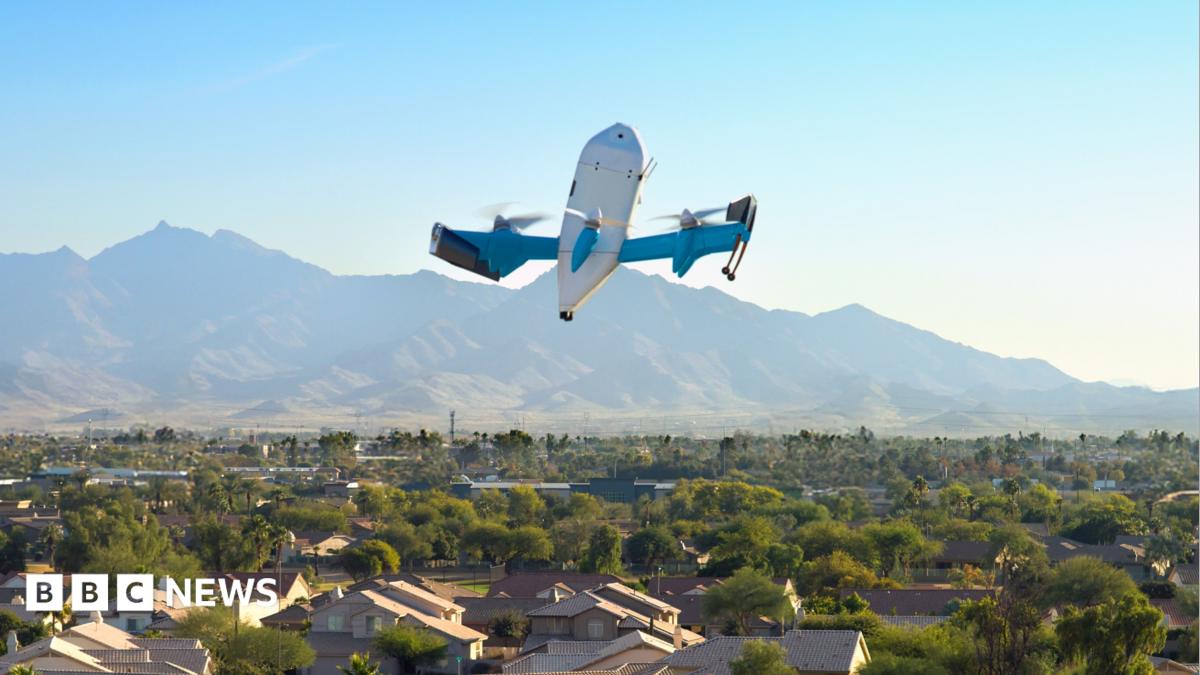
The hum of drone noise has become a daily irritation for residents like Ashley Schmidt, a 44‑year‑old administrative assistant in North Garland, Dallas, who says the constant buzz from delivery drones triggers a fight‑or‑flight response. Schmidt, who once spent weekends photographing insects in her garden, now stays indoors because the sound of drones approaching, hovering over her home, and departing is “very annoying.” She is not alone; a growing number of people across the United States are voicing similar complaints as companies such as Amazon and Walmart roll out aerial delivery services.
Delivery drones, once a novelty, are fast becoming a fixture in many American neighborhoods. Amazon’s Prime Air is expanding to nearly 500 cities and towns, offering shipments that fit into a shoebox‑sized compartment, and has even begun operations around Darlington in northern England. Smaller operators are also entering the market, allowing customers in several U.S. cities to order pizza, ice cream or other treats delivered by aircraft that zip across the sky. While the convenience is undeniable, the sudden, high‑pitched whine of rotors cutting through low‑altitude air is strikingly different from the background hum of traffic, researchers say.
Antonio Torija Martinez, a professor of acoustic engineering and psychoacoustics at the University of Salford, notes that drone sound is “particularly noticeable, even when overall sound levels are relatively low.” He explains that because drones fly at low heights, they can expose communities that have not previously dealt with significant aircraft noise, making residents more sensitive to the new soundscape. Research he cites shows people react strongly when a noise is perceived as novel, intrusive or frequent. Those who benefit from drone deliveries may tolerate the sound better, but the professor warns that complaints are likely to rise as the sector expands.
In the United States, the Federal Aviation Administration (FAA) oversees commercial drone operations, but it has faced criticism for allowing noisy delivery flights to continue. The agency maintains that operators and local community leaders share responsibility for addressing concerns, a stance that has not quelled resident frustration. The pressure to quiet the skies has spurred several startups to explore quieter propulsion systems.
London‑based Greenjets, led by future technologies head Darren James, claims its enclosed‑propeller design can cut drone noise by at least two‑thirds. By housing spinning blades inside a sound‑absorbing pod, slowing rotor speed, and using vibration‑dampening materials, the company aims to direct noise away from the ground. Greenjets’ technology has already found applications beyond residential deliveries, supporting police and harbour security teams in Germany and assisting African conservationists tracking poachers without alerting them.
Military interest in silent drones is also emerging. Robert Tollast, a research fellow at the Royal United Services Institute (RUSI), says the U.S. Special Forces are experimenting with reduced‑sound platforms, although speed remains the primary priority for larger combat drones used in the Russia‑Ukraine conflict. “Make it faster, not less quiet, seems to be the approach,” he remarks.
Another entrepreneur, Detroit‑based Greg Sharrow, turned to quieter rotor designs after a 2012 project to film a violinist required a less noisy aerial camera. Realising that blade tips generated most of the sound, Sharrow invented a tipless propeller with twisted loop‑shaped blades. Initial testing in water proved easier than repeated flight trials, leading to a quieter boat propeller that later informed his drone work. His company, Sharrow Engineering, now focuses on “ultra‑quiet” rotors, which he says have been validated as dramatically quieter in drone applications.
Major delivery firms are also tweaking their fleets. An Amazon spokesperson reports “measurable sound improvements,” with newer drones featuring custom‑designed propellers that produce almost half the perceived sound of earlier models and emit a milder tone. Wing, the drone arm that services Walmart deliveries, claims its propellers are engineered to minimise noise and that its flight‑path algorithms avoid repeatedly overflying the same residence.
For residents like Schmidt, however, incremental improvements are insufficient. “I would like them to completely stop until they figure out how their services stop being a nuisance,” she says, reflecting a sentiment that could shape future regulation. As drone deliveries become more common, the balance between convenience and community comfort is set to drive further research, policy discussions, and perhaps stricter noise standards. The next steps will likely involve tighter collaboration between manufacturers, regulators, and local stakeholders to ensure that the skies remain useful without becoming a source of relentless drone noise.