


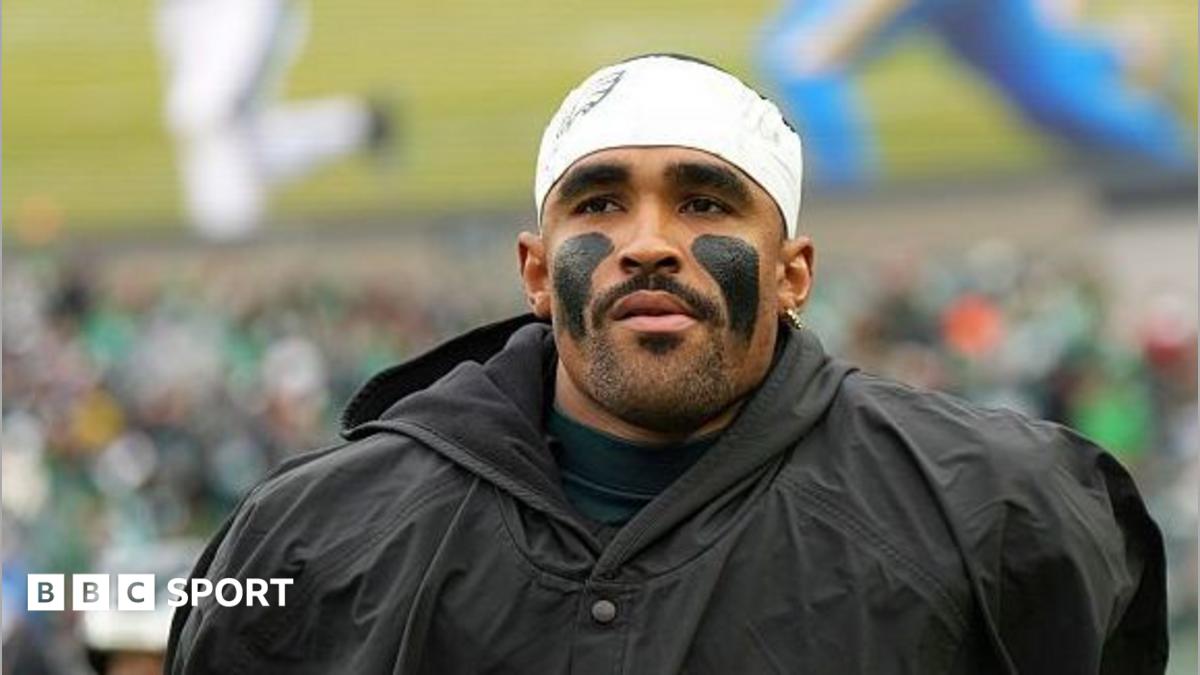
American football authorities are facing fresh scrutiny over player safety after star quarterback Jalen Hurts was cleared to take the field and travel overseas despite carrying a vascular injury. The issue came to public attention when the Philadelphia Eagles announced that a severe jalen hurts blood clot problem would likely rule him out for the remainder of the season. Multiple clots were found in his lungs, which is a life-threatening complication if it is not addressed promptly with clinical care. Hurts had initially received a diagnosis in London before playing an international fixture on 11 October, raising serious concerns across professional sports about travel risks and player welfare.
The physical trouble began on Sunday, 4 October, when an opponent trod on Hurts’ left calf during a loss against the Los Angeles Rams. The 28-year-old quarterback managed to finish that contest and went through a full week of practice, though he first alerted medical staff to discomfort on Thursday, 8 October. After undergoing treatment on Thursday and Friday, he travelled with the team to England, landing on the morning of Saturday, 10 October. Hurts went to the Cleveland Clinic in London that evening for an ultrasound, which revealed a superficial vein thrombosis in his calf. Team and independent doctors cleared him to play the following day against the Jacksonville Jaguars at Tottenham Hotspur Stadium.
Hurts did not get back to the Philadelphia team hotel until around 3am on the morning of the match. While initial reports claimed he had remained awake for 36 consecutive hours leading into kickoff, his agent clarified that the quarterback got some rest after reaching the hotel and slept again at the ground before playing the full fixture. Medical staff told him to get a follow-up scan within 72 hours and gave him permission to take the long flight home to the United States that Sunday night. When a second ultrasound took place on Wednesday, 14 October, following routine therapy, doctors saw that the clot had shifted, forcing the team to bench him for their subsequent fixture.
The situation deteriorated further by Monday, 19 October, when the Eagles and Hurts’ agent issued a joint update on his health. Advanced testing confirmed he had developed deep vein thrombosis alongside bilateral pulmonary emboli, meaning several clots were now blocking blood flow across both lungs. His ongoing rehabilitation requires a course of blood-thinning drugs. Medical specialists anticipate a full recovery in the long run, but the severity of the condition means the 2025 Super Bowl Most Valuable Player is not expected to play again during the current campaign.
The circumstances behind his clearance have caused friction between the league and the players. Dr Allen Sills, the chief medical officer for the league, had been on the ground in London and arranged the clinic visit. Sills stated during a press briefing that while the league enforces specific frameworks for heat illness, concussions and emergency care, it has no formal rules governing vascular issues of this kind. Sills insisted that the clinicians who examined Hurts behaved in a very conservative manner and expressed complete faith in the Eagles’ medical staff. He maintained that a negative development down the line does not mean the original clinical approach was broken, noting that unexpected medical complications can occur even when physicians do the right things.
The NFL Players Association responded with immediate pushback, demanding a formal investigation into the sequence of events. The union revealed that league executives had earlier informed them that no official review of Hurts’ clinical treatment would take place. That stance changed quickly, and both sides released a joint statement confirming they have agreed to examine the case together. Medical specialists such as Dr Niko Mihic, the Real Madrid chief medical officer who serves as local coordinator for an upcoming NFL game in Madrid on 8 November, pointed out that clots are unusual among elite competitors and require tricky judgment calls, particularly regarding long flights. Mihic noted that an athlete who suffers an embolism carries a high risk of developing another one later in life.
The controversy comes at a delicate time as American football expands its footprint across the globe. Players have had to endure gruelling journeys, including a 16-hour flight to Australia for a game in September, alongside persistent concerns raised by union leader JC Tretter regarding playing surfaces in foreign venues like Brazil. With a record nine fixtures scheduled outside the United States this year and ambitions to reach 16, questions over medical oversight on the road are becoming harder to dismiss.
Back in Philadelphia, the loss of their leading offensive figure has sent the franchise into a tailspin. Back-up quarterback Tanner McKee started on Monday but could not stop a 38-21 home loss to the Dallas Cowboys, marking five consecutive defeats for head coach Nick Sirianni. The team must now decide how to salvage their season before the upcoming trade deadline closes in two weeks.


