


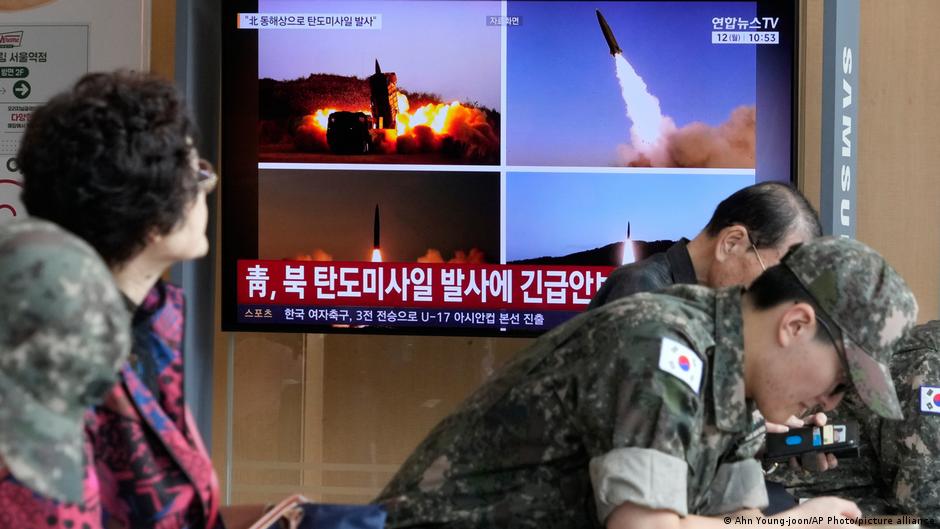
North Korea missiles were fired toward the sea off the country’s east coast on Thursday, a move that South Korea’s military said involved around ten short‑range ballistic rockets launched from near Wonsan at about 12:30 p.m. local time. The strike, reported by the Joint Chiefs of Staff, comes as the Korean peninsula grapples with escalating border disputes and uncertainty over forthcoming nuclear negotiations involving the United States.
South Korean officials quickly disclosed that they were bolstering surveillance and maintaining a heightened state of readiness, while also sharing real‑time intelligence with American and Japanese counterparts. Japan’s Defense Ministry confirmed that the missiles landed outside its Exclusive Economic Zone, indicating that the projectiles fell short of Japanese waters. The coordinated response show the close security ties among the three allies, who have repeatedly cited the need for joint monitoring in the face of North Korean provocations.
The latest launch marks the tenth recorded missile test by Pyongyang this year, following a series of short‑range launches on October 12. Analysts note that the frequency of these tests reflects a pattern of Pyongyang using missile drills to signal displeasure over South Korean actions and to assert its military capabilities. The October 12 launch, for instance, occurred a day after former US President Donald Trump hinted at a possible meeting with Kim Jong Un, adding a diplomatic layer to the military display.
Tensions on the peninsula have been inflamed by a series of incidents in the Demilitarized Zone. On September 21, three South Korean soldiers were injured when landmines exploded within the DMZ. A joint investigation by Seoul and the United Nations later concluded that the mines had been planted by North Korea south of the military demarcation line more than a year earlier. Pyongyang has denied involvement and warned of retaliation should it feel provoked.
In response to the latest missile launch, Kim Yo Jong, the sister of North Korean leader Kim Jong Un, dismissed South Korean demands for an apology as “despicable” and rejected Seoul’s offer of medical equipment. Her remarks, issued through state media, were aimed at reinforcing Pyongyang’s defiant stance and signaling that any perceived affront would not be tolerated.
The missile activity also coincides with North Korea’s announcement to resume propaganda broadcasts along the border and to deploy new weapons systems in the area. These moves appear designed to increase pressure on South Korea and to shape the narrative surrounding the ongoing border dispute. Seoul, seeking to prevent accidental clashes, has proposed talks to clarify the demarcation line and to establish mechanisms that could avert unintended military encounters. To date, Pyongyang has not responded to the proposal.
Amid the military maneuvers, diplomatic undercurrents are equally pronounced. US President Donald Trump’s recent overtures toward Pyongyang have sparked concerns in Seoul about being sidelined in any prospective nuclear negotiations. While Washington continues to rely on South Korea as a key regional ally, Trump’s approach has introduced uncertainty regarding the role the South Korean government might play in any future talks with the North.
The broader context of these developments is shaped by a history of intermittent dialogue and periodic escalations between the two Koreas. Although occasional high‑level talks have occurred, mutual distrust remains high, especially after incidents such as the DMZ landmine explosions. The current missile launch adds another layer of complexity, prompting regional actors to reassess their security postures and diplomatic strategies.
For ordinary Nigerians following the story, the significance lies in how regional stability in East Asia can affect global markets, particularly oil prices and trade routes that intersect with Asian economies. Fluctuations in these areas often ripple outward, influencing commodity prices and investment flows that reach African markets. Moreover, the international community’s response to North Korean provocations can set precedents for how similar crises are managed elsewhere.
As the day progressed, South Korean forces continued to monitor the maritime area for any further launches, while the United States and Japan maintained a watchful stance, ready to coordinate any necessary defensive measures. No casualties were reported from the missile splash‑down, and the rockets did not breach any neighboring territorial waters.
The next steps appear to hinge on diplomatic outreach. South Korea has reiterated its invitation for dialogue aimed at clarifying border issues and preventing accidental clashes, a move that could open the door to de‑escalation if Pyongyang chooses to engage. Meanwhile, the United States is expected to continue its consultations with Seoul and Tokyo, ensuring that any response remains unified and measured.
The situation remains fluid, with the possibility of additional missile tests or further diplomatic overtures looming. Observers will be watching closely for any sign that Pyongyang either escalates its military activities or opens a channel for negotiation, as both outcomes carry significant implications for regional security and international diplomatic efforts.


