


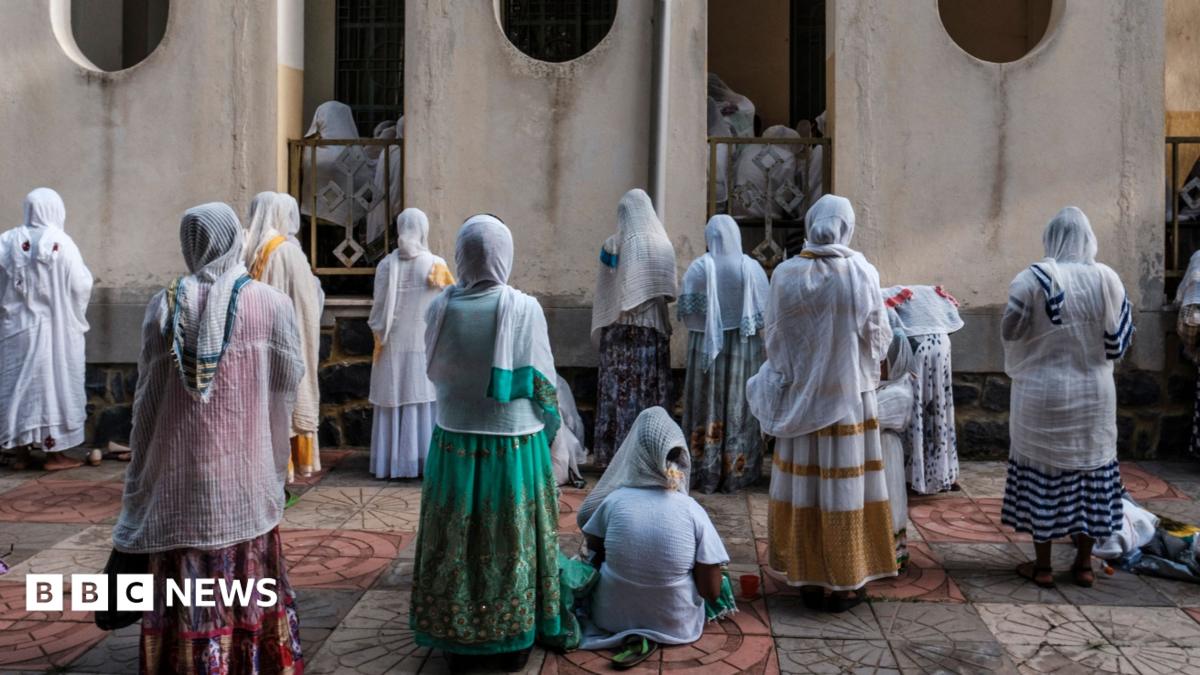
The Orthodox Church says more than 60 people were killed in a string of Ethiopia attacks that hit three villages in the Shirka district of the Oromia region on Saturday. A resident whose 75‑year‑old father died described the incident as an ambush, saying attackers surrounded the community from all sides while locals were “completely unprepared and had no prior knowledge.” The church’s Holy Synod confirmed that 20 houses were razed and that five of the dead were children, calling the episode a “massacre.”
Local authorities blamed the newly formed Alliance for Survival, a rebel coalition that includes the Oromo Liberation Army (OLA), for the violence. The regional government pledged to act against those responsible, while the OLA has so far refused to comment on the allegations, though it has previously denied involvement in similar attacks. Prime Minister Abiy Ahmed has repeatedly accused the OLA of targeting civilians and religious sites as part of a broader destabilisation campaign, a charge the group rejects, saying its fight is for greater Oromo rights.
Eyewitness accounts collected by BBC Amharic paint a grim picture of the assault. Survivors said gunfire erupted without warning, forcing families to flee as flames engulfed homes. One survivor recounted how security forces arrived after the shooting had ended, unable to halt the on‑ground killings. The church’s statement on Facebook warned that attacks on Christians have been rising, eroding Ethiopia’s values of mutual respect and peaceful coexistence. It added that repeated pleas for security assistance have gone unanswered, leaving communities vulnerable.
The human toll in this incident marks it as one of the deadliest in recent years. A July 2026 report by the Ethiopian Human Rights Council, a non‑governmental watchdog, recorded 458 deaths in the area over the previous four years, noting a pattern of armed groups targeting local populations, especially followers of the Ethiopian Orthodox Tewahedo Church, in what it described as religiously motivated assaults. While the council’s findings show a broader climate of insecurity, the scale of Saturday’s killings, more than 60 lives lost in a single day, stands out as a stark escalation.
The aftermath has seen a wave of displacement as residents abandon their homes fearing further attacks. Many have sought refuge in nearby towns, while others remain hidden in the hills, hoping to avoid detection. The destruction of 20 houses not only leaves families homeless but also disrupts livelihoods that depend on agriculture and small trade, deepening the humanitarian crisis in an already fragile region.
Ethiopia’s religious landscape is split roughly two‑thirds Christian, predominantly Orthodox, and one‑third Muslim. Historically, tensions have flared along both ethnic and religious lines, with previous reports documenting attacks on Muslims in the same area. Residents who have spoken to the BBC over time describe the violence as intertwined, reflecting long‑standing grievances between Oromo groups and the central state, as well as sectarian animosities.
The government’s response, while vocal, has yet to translate into concrete protection on the ground. Security forces were reportedly present after the massacre began, but their inability to prevent the killings raises questions about capacity and coordination. Officials in the Oromia regional administration have announced plans to investigate and hold perpetrators accountable, yet no arrests have been reported so far.
International observers have expressed concern over the surge in sectarian violence, noting that Ethiopia’s stability hinges on the ability of the state to safeguard all religious communities. The United Nations and several humanitarian agencies have called for unfettered access to the affected districts to assess needs and provide assistance, but security constraints have hampered outreach.
As families mourn the loss of loved ones, the Orthodox Church continues to press the government for decisive action. In its statement, the church lamented that “so far there has been no solution” to the persistent insecurity, urging authorities to uphold the nation’s promise of peaceful coexistence. The next steps appear to involve a deeper investigation by regional officials and potential deployment of additional security personnel, though details remain pending.


