


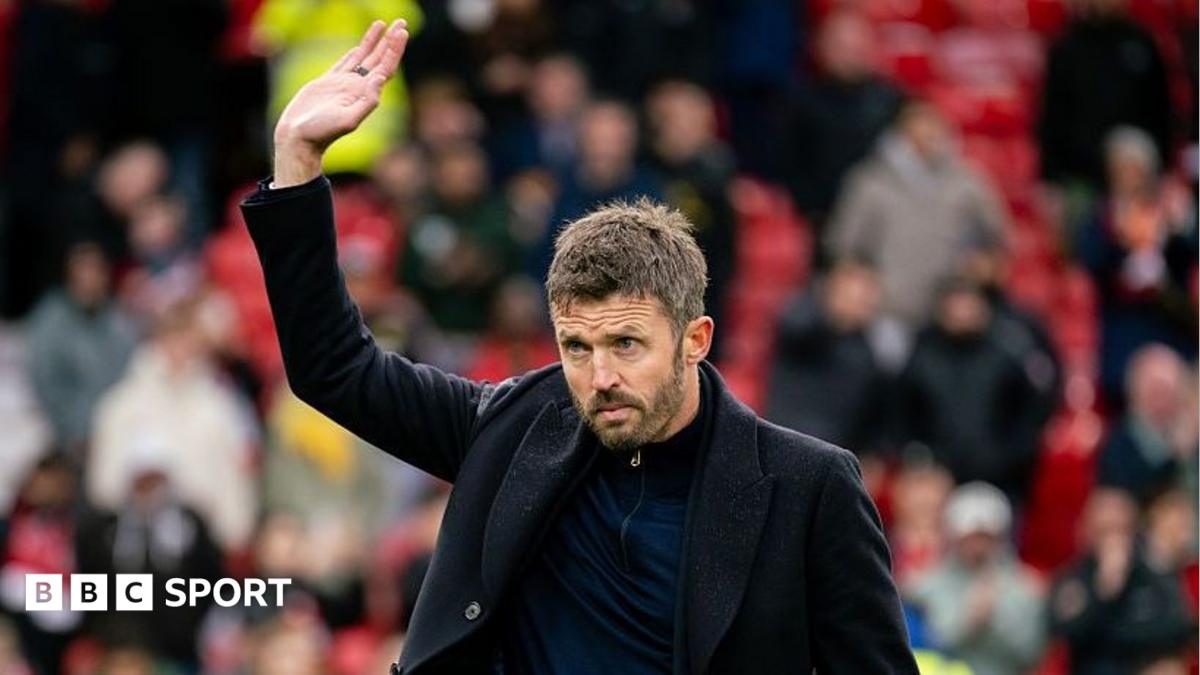
The defeat at Old Trafford on Friday saw Manchester United lose 3-0 to Bournemouth, leaving supporters angry and pointing fingers at both manager Michael Carrick and the club’s senior hierarchy. Carrick, who has been in charge for eight games without a win, the longest winless stretch since the 2015‑16 season, walked off the pitch to a chorus of boos that quickly turned into chants targeting the Glazer family and new shareholder Sir Jim Ratcliffe. The atmosphere show a growing belief among fans that changing the head coach alone will not solve the deeper problems plaguing the club.
Carrick tried to rally his side before the match, telling reporters, “We’ll be a different team on Sunday. We have to be a different team on Sunday.” The optimism vanished quickly as Bournemouth took control early, scoring within the first minute. By the final whistle the scoreline read 3‑0, and Carrick’s future hung in the balance. When asked whether he would still be in charge for the upcoming trip to Chelsea, he admitted he did not know, adding, “The responsibility is mine… I love this place and I’ll always do what I feel is going to be the best for the football club.” His uncertainty only added to the fans’ frustration.
The reaction inside the stadium was immediate. After Carrick disappeared down the tunnel, supporters sang his name in a brief tribute before turning their chants toward the players. The booing continued until the last United defender, Diogo Dalot, left the field. Within seconds of the kick‑off, anti‑Glazer and anti‑Ratcliffe songs echoed around the Stretford End, a clear reminder that the discontent runs deeper than the current results. The Glazer family, owners since a leveraged takeover in 2005, are now blamed for a debt burden that has swollen to more than £1.15 billion, with interest payments reaching £852 million and a yearly interest bill of £37 million. Fans argue that the money could be better spent on strengthening the squad rather than servicing debt.
Sir Jim Ratcliffe, who became a minority shareholder on Christmas Eve 2023, was initially welcomed as a potential saviour by a segment of the fanbase. However, recent decisions have fueled skepticism. United’s hierarchy backed Erik ten Hag after the surprise FA Cup triumph over Manchester City in 2024, splashing over £200 million on signings such as Leny Yoro, Matthijs de Ligt and Manuel Ugarte. Ten Hag’s tenure was later marred by a broken promise not to sell homegrown talent Scott McTominay to fund Ugarte’s £50 million move, a promise that the club admitted it had broken. Ten Hag was dismissed in October 2024, and his replacement, Ruben Amorim, left Sporting mid‑season under pressure, only to be sacked in January after a clash with director of football Jason Wilcox over playing style.
Wilcox, who moved to United from Southampton after the Ratcliffe takeover and later rose in stature following the dismissal of Dan Ashworth, has become a focal point for fan anger. During the Bournemouth match, his name was shouted alongside the Glazers, and he was booed as he left the stadium two hours after the final whistle. Wilcox’s role in recruitment decisions, despite a higher budget, has drawn criticism, especially as United’s recent spending has not translated into consistent results.
The unrest is not limited to the dugout and boardroom. Ticket tout investigations launched this summer have sparked protests from major fan groups, who claim the club is trying to push regular supporters out in favour of corporate sales. United’s response, that the crackdown is meant to protect genuine fans, has fallen on deaf ears. A parallel controversy surrounds plans for a new 100,000‑seat stadium. The club’s survey suggested a majority in favour, but the projected cost of over £2 billion and a recent £63.5 million land purchase have left many supporters skeptical. On the day of the Bournemouth loss, fans on the Stretford End openly told Ratcliffe they had no interest in a new ground.
Chief executive Omar Berrada, who previously worked with Wilcox at Manchester City, was also present at Old Trafford. His ties to City’s recent financial rule breaches added another layer to the criticism, as supporters linked United’s off‑field mismanagement to the same governance issues that have plagued their city rivals.
The cumulative effect of poor results, financial strain, and perceived mismanagement has created a volatile environment. While Carrick’s record, guiding United back into the Champions League after a two‑year absence, earned him a permanent role, a third managerial dismissal in as many seasons would further tarnish the club’s reputation. The “Standards” banner displayed on the Stretford End, featuring legends Bryan Robson, Eric Cantona and Roy Keane, served as a reminder of the club’s illustrious past and the standards fans feel are being ignored.
As the season progresses, United’s board faces a crossroads. The immediate question is whether Carrick will retain the job for the upcoming Chelsea fixture, while longer‑term discussions about ownership structure, debt reduction and stadium development continue to dominate fan discourse. The next steps will likely involve high‑level meetings among the Glazers, Ratcliffe and senior executives, as they attempt to address both on‑pitch performance and the broader grievances that have erupted across Old Trafford.


