


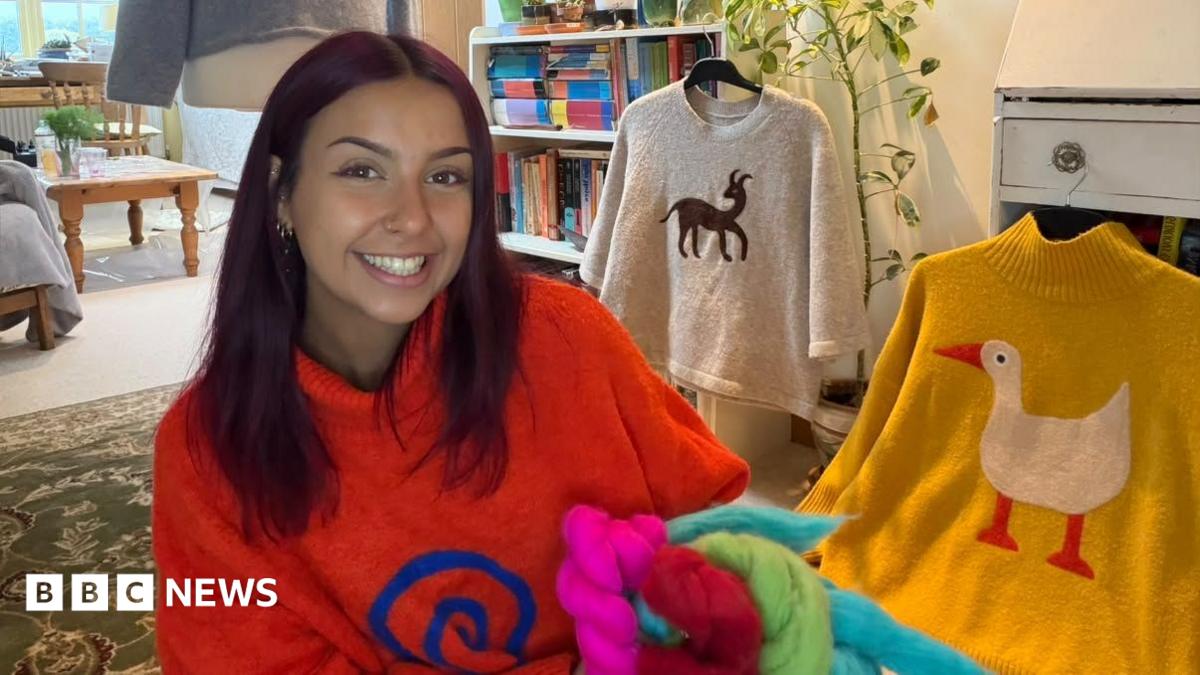
The rise of visible mending has taken the fashion world by surprise, as the practice of turning garment flaws into decorative statements moves from community workshops to the shelves of major retailers and even the catwalk. Alice Brown, a 27‑year‑old forest ranger from Lincolnshire, exemplifies the shift; she scours second‑hand stores for pieces with holes and uses needle‑felted animals and insects to cover the damage, sharing her creations online and attracting a growing following. “I see it as a challenge,” she says, noting that the placement of a hole forces her to think creatively about the design, whether it sits under the arm or on the shoulder.
In Brighton, instructor Jayne Eagle runs Saturday workshops where participants learn to attach fabric patches behind tears, allowing a playful cat‑face design to peek through. She draws on Japanese stitching traditions such as Boro and Sashiko, encouraging students to use contrasting threads and bold geometric patterns instead of trying to hide the mend. One attendee, Nicola, used the technique to turn sunscreen marks on a T‑shirt into a deliberate feature, while another, Lisa, proudly displayed a deliberately patched second‑hand jacket, joking that she now points it out to others. Their experiences illustrate a broader cultural shift: where once mending meant saving money, visible mending celebrates the decision to extend a garment’s life.
The movement began roughly six years ago, according to Eagle, and has accelerated as consumers push back against the throwaway mentality of fast fashion that has dominated since the 1980s. The environmental toll of mass‑produced clothing, high carbon emissions, water consumption and poor labour practices, has spurred interest in more sustainable practices. Retailers are taking note. Brands such as Ralph Lauren and ultra‑fast‑fashion giant Shein now sell stitched and patched pieces, albeit new items designed to look repaired. High‑street chains are also offering in‑house repair services and workshops to give shoppers practical ways to extend the life of their favourite clothes.
Uniqlo’s head of sustainability, Maria Ledous, explains the company’s aim: “We want to give customers practical ways to extend the life of the clothes they already love, rather than simply replacing them.” Primark, often criticised for low‑price, disposable fashion, has joined the trend as well. “We don’t think that affordability and durability should be opposites,” says Vicki Swain, Primark’s longevity lead. Outdoor brand Finisterre reports that about one‑fifth of the repairs it performs are intentionally eye‑catching, while boutique artisan store Toast finds roughly a third of its customers opt for decorative mends. Toast’s chief executive, Suzie de Rohan Willner, highlights the personalized nature of the service: customers can bring a garment in and decide what they want it to become next.
Toast’s repair work is free, but the shop sells “renewed” off‑the‑peg pieces at higher prices to reflect their unique character. Levi’s, a label with a long history of fan‑driven customisation, is launching a workshop programme focused on traditional repair skills such as button replacement and hemming. The company’s research shows younger shoppers are keen to mend more but lack the know‑how. At a recent launch event in London, participants expressed differing preferences. Sixteen‑year‑old Bianca from East London said, “If you have holes in your clothes people are like ‘Ha ha! You’re poor!’” while 19‑year‑old Theo prefers his jeans to look as they did when bought. His friend Nicholas adds that most people simply want to look “fresh” and avoid the “dumpster” aesthetic.
Levi’s head of global design innovation, Paul Dillinger, believes that more creative repairs will eventually win over the younger crowd. “No‑one has time for that perfect ‘straight from the shop’ thing. That’s not cool. People crave agency,” he says, noting that mending can become a personal narrative: “It’s not a mustard stain, it’s a memory of a great day in the ballpark.” As the trend gains momentum, visible mending is poised to blur the line between sustainability and style, offering shoppers a way to express individuality while reducing waste. The next phase will likely see more brands integrating decorative repair options into their product lines and expanding community workshops to meet growing demand.