


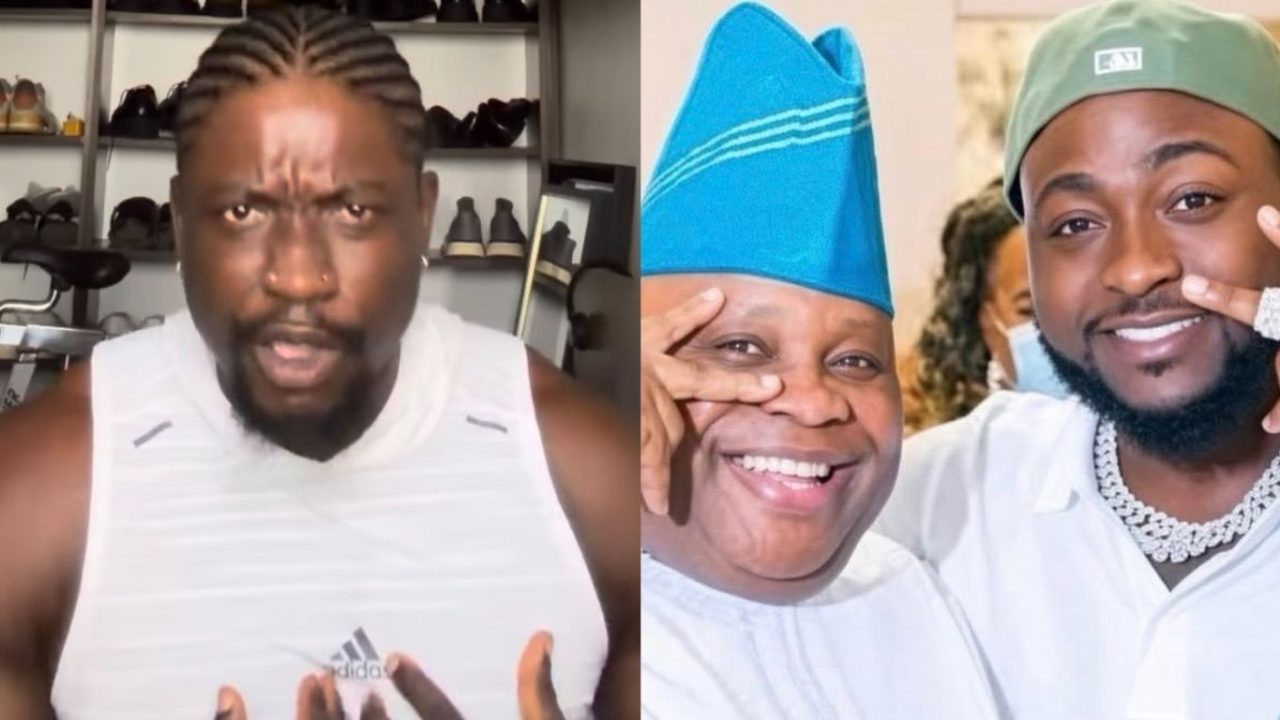
VeryDarkMan calls Osun governor Ademola Adeleke an APC puppet
Online commentator Martins Vincent Otse, who goes by the handle VeryDarkMan, has taken to Instagram to argue that Governor Ademola Adeleke of Osun State is in fact an All Progressives Congress (APC) supporter who pretended to oppose the party only to win votes. In a series of posts, the critic said the governor’s public opposition was a façade and insisted that the singer Davido, whose real name is David Adeleke and who is the governor’s nephew, was fully aware of the arrangement. The allegation that a high‑profile entertainer knew his uncle’s hidden political allegiance has added a new layer to an already heated post‑election discussion in the southwest.
Allegations over Osun election
VeryDarkMan laid out his case in a set of direct messages posted to his Instagram followers. He argued that the narrative presented to Nigerians about a fierce contest between the People’s Democratic Party (PDP) and the APC was misleading. According to him, the 2022 gubernatorial race in Osun functioned more like an internal APC primary than a genuine inter‑party showdown. The commentator wrote that Governor Adeleke “finally showed Nigerians what he has been hiding all these while, that he’s APC puppet and he has always been.” He followed that claim with a second post stating, “A lot of you don’t know that the election in Osun was an APC primaries and yes, Davido knew 100 percent that his uncle Ademola Adeleke is APC.”
The comments seek to recast the election as a staged conflict, suggesting that the governor only kept an outwardly hostile posture toward the APC to preserve his electoral prospects. By framing the contest as a disguised party primary, VeryDarkMan implies that voters were denied a true choice between opposing political platforms. While the posts do not provide documentary evidence, they echo a broader suspicion among some observers that political figures in Nigeria sometimes adopt temporary oppositional stances to broaden appeal, only to revert to their original affiliations once power is secured.
The Adeleke family’s political weight
The Adeleke name carries considerable clout in Osun State and beyond. The family’s prominence dates back to previous generations, and both the governor and his nephew have leveraged that legacy during the campaign. Ademola Adeleke ran a populist campaign that mixed traditional rallies with viral dance videos, a strategy that resonated with younger voters. Davido, one of Africa’s biggest Afrobeats stars, used his massive social‑media following to promote his uncle’s candidacy, appearing at rallies, posting supportive messages, and even performing at campaign events.
That blend of entertainment and politics created a narrative in which family loyalty became a central theme. Supporters saw the uncle‑nephew duo as a symbol of a new, youthful politics that could challenge entrenched interests. Critics, however, have long warned that such personal branding can blur the line between genuine policy debate and celebrity‑driven hype. The VeryDarkMan posts tap into that criticism by suggesting that the family’s public front concealed a hidden party allegiance.
Bringing Davido into the fray
Davido’s involvement in the campaign was highly visible. After the election, the singer celebrated his uncle’s victory on multiple platforms, describing it as a triumph over “entrenched political opponents.” VeryDarkMan contends that this public celebration was part of a deliberate cover‑up, alleging that Davido intentionally kept his uncle’s supposed APC ties under wraps because acknowledging them would have damaged the campaign’s momentum.
In Nigerian party politics, it is not uncommon for candidates to negotiate behind the scenes, forming quiet pacts that may cross party lines. Such maneuvers are often tolerated as part of the political landscape, but when a public figure openly accuses a sitting governor of duplicity, the reaction can be swift and polarising. Social media users quickly divided into two camps: some echoed VeryDarkMan’s suspicion, pointing to the governor’s earlier statements that seemed critical of the APC; others defended Adeleke, noting his official affiliation with the PDP and his history of opposing the ruling party at the federal level.
The broader context of party switching
The notion of “cross‑carpet” moves, politicians shifting allegiance from one party to another, has been a recurring feature of Nigeria’s democratic experience. Analysts observe that politicians sometimes adopt a “big tent” approach, courting voters across ideological divides while maintaining core patronage networks. In Osun, the allegation that the election was effectively an APC primary adds to a pattern where party labels become fluid and the real contest is over control of local power structures rather than strict ideological battles.
For ordinary Nigerians, these dynamics matter because party affiliation often determines access to resources, development projects, and employment opportunities. If a governor is perceived to be secretly aligned with the party that holds national power, constituents may question the authenticity of promises made during the campaign. Conversely, if the governor truly belongs to the opposition, his ability to deliver on those promises may be constrained by limited cooperation from the federal government. The debate sparked by VeryDarkMan therefore touches on deeper concerns about transparency, accountability, and the credibility of elected officials.
Reactions and next steps
Since the Instagram video and accompanying captions went viral, they have been shared across Twitter, Facebook and TikTok, keeping the story alive in the online sphere. So far, neither Governor Adeleke nor any representative for Davido has issued an official statement addressing the accusations. The governor’s office typically responds to substantive legal challenges rather than social‑media commentary, which may explain the silence.
Political analysts say that unless a formal complaint is lodged with the Independent National Electoral Commission (INEC) or a court, the claims are likely to remain in the realm of public opinion. However, they add that sustained pressure from influential online voices can force politicians to clarify their positions, especially when the issue involves a high‑profile celebrity.
As the discussion continues, observers will watch for any move by the PDP or the APC to either distance themselves from the allegations or to use them for strategic advantage ahead of upcoming elections. The episode also illustrates how social media personalities can shape political narratives, turning family connections and entertainment fame into focal points of partisan debate.
The story is still developing, and any official response from Governor Adeleke or Davido could shift the conversation in the days ahead.