


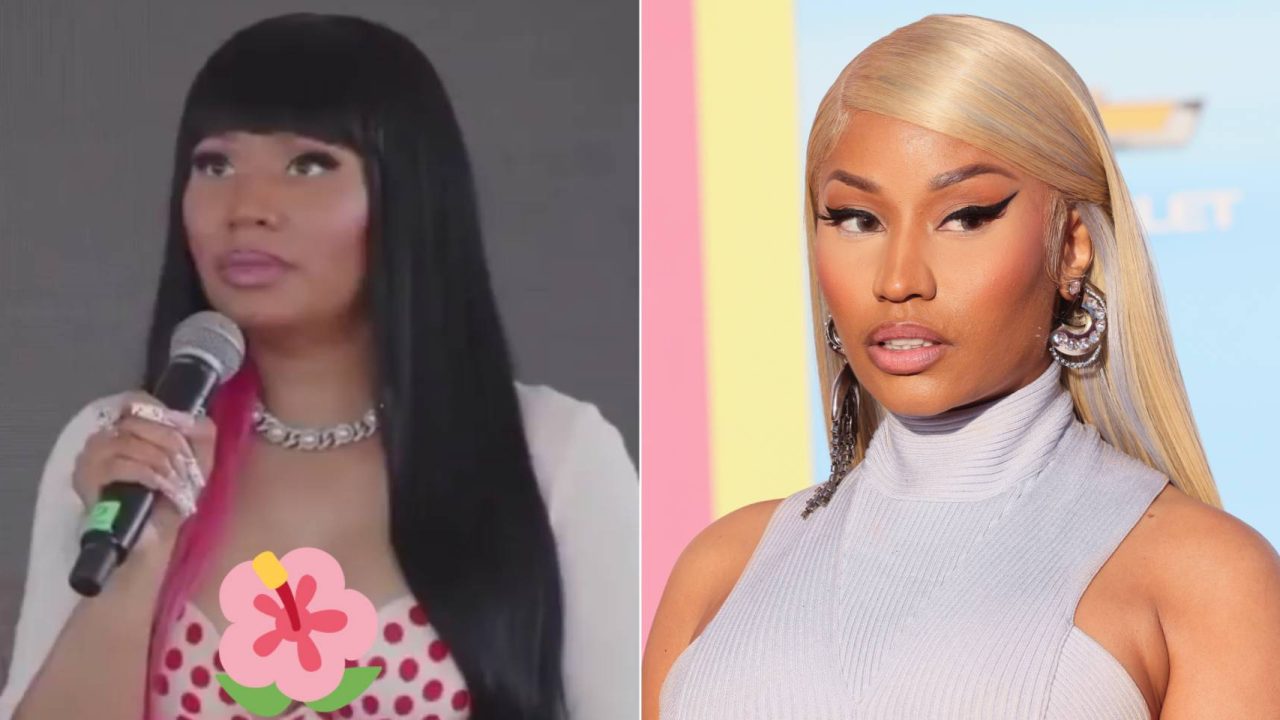
Nicki Minaj used a recent interview to draw attention to the growing violence against Christians in Nigeria, urging fellow celebrities, influencers and other public personalities to speak up. The American rapper, who said her pastor hails from Nigeria and that she enjoys a large base of Nigerian fans known as “Barbz,” questioned why the plight of Christians was not receiving more coverage. “My pastor is from Nigeria, so I have a link to Nigeria because of him and I have a lot of Nigerian Barbz. Why isn’t anyone making a big deal out of the brutality in which Christians are being treated in Nigeria?” she asked.
Minaj’s call for a louder voice
During the same conversation, Minaj suggested that the lack of discussion stems from a perception that the issue is not “cool” enough for public debate. “Sometimes when things aren’t cool to talk about, people just don’t talk about it,” she said, adding that she hopes more well‑known figures will use their platforms to highlight the suffering. Her remarks were posted on Pulse Nigeria’s Twitter feed on October 11, 2026, and quickly spread across social media, prompting reactions from both fans and commentators.
The rapper’s appeal taps into a broader pattern where high‑profile entertainers use their reach to spotlight humanitarian concerns. In recent years, musicians, actors and athletes have taken stands on conflicts, climate change and health crises, often prompting news outlets to give the issues a wider audience. Minaj’s own connection to Nigeria through her pastor gives her a personal stake, and her reference to the “Barbz”, a nickname for her global fan base that includes many Nigerians, show how diaspora audiences can amplify a message back to the country of origin.
Context of the attacks
Nigeria has long grappled with sectarian tension, and recent months have seen a spike in attacks on churches and Christian communities, particularly in the northern and central states. While exact numbers fluctuate, reports from local agencies and human‑rights groups indicate that dozens of worshippers have been killed, and many more displaced. The violence often involves armed groups that target places of worship, sometimes under the pretext of broader insurgency or communal retaliation. For ordinary Nigerians, the attacks translate into fear of gathering for worship, disruption of daily life and a sense of abandonment by authorities.
The roots of the unrest can be traced to a complex mix of historical, political and economic factors. Decades of competition for resources, ethnic rivalries and the legacy of colonial borders have left the country vulnerable to identity‑based clashes. In the north, militant organisations that claim to defend a particular interpretation of Islam have increasingly targeted symbols of other faiths, including churches and Christian schools. In the centre, disputes over land ownership and political representation sometimes erupt into violent reprisals against minority groups.
These dynamics are compounded by weak security infrastructure in many rural areas, where police presence is limited and local militias fill the vacuum. When an attack occurs, the response is often delayed, leaving survivors without immediate assistance. The resulting atmosphere of uncertainty discourages people from attending regular services, which in turn erodes the social fabric that churches traditionally provide, from education and health outreach to community cohesion.
Reactions from the public and officials
Minaj’s appeal resonated with many Nigerians who feel their concerns are overlooked on the global stage. Several Nigerian entertainers took to Instagram and X to echo her sentiment, calling for solidarity and urging the government to step up security around churches. A spokesperson for the Christian Association of Nigeria (CAN) issued a brief statement, noting that the organization had repeatedly appealed for protection but “still awaits decisive action from the federal and state governments.”
The response from officials has been mixed. While some state governors have pledged to increase patrols near vulnerable worship sites, critics point out that implementation remains uneven. Federal ministries have cited budgetary constraints and the need to balance multiple security challenges across the country. Human‑rights observers argue that a lack of transparent reporting makes it difficult to gauge progress.
International observers have also noted the pattern of selective media coverage, where conflicts in some regions attract sustained attention while others fade quickly. Analysts point out that the lack of “viral” moments can hinder fundraising and humanitarian aid, leaving victims without the resources needed for recovery. In the age of rapid online sharing, a single tweet from a global star can shift the spotlight, a fact that Minaj appears keen to exploit.
What may happen next
The rapper’s platform has the potential to bring the issue into broader conversation, especially among younger audiences who follow her music and social media presence. If other high‑profile figures join the call, it could pressure policymakers to prioritize the safety of Christian congregations. Meanwhile, NGOs working on inter‑faith dialogue say they will leverage the heightened awareness to promote community‑based peace initiatives.
Religious leaders across denominations have already begun coordinating joint statements, emphasizing that protection of worship places benefits the whole nation. Some civil‑society groups are preparing to organize workshops that bring together Christian and Muslim youths in affected areas, hoping to defuse tensions before they turn violent.
As the story continues to unfold, Minaj’s statement serves as a reminder that public figures can play a role in shaping discourse around humanitarian crises, and that the ongoing violence against Christians in Nigeria remains a pressing concern that many hope will finally receive the attention it deserves. The next week will likely see whether the momentum generated online translates into concrete policy proposals or increased funding for relief efforts.


