

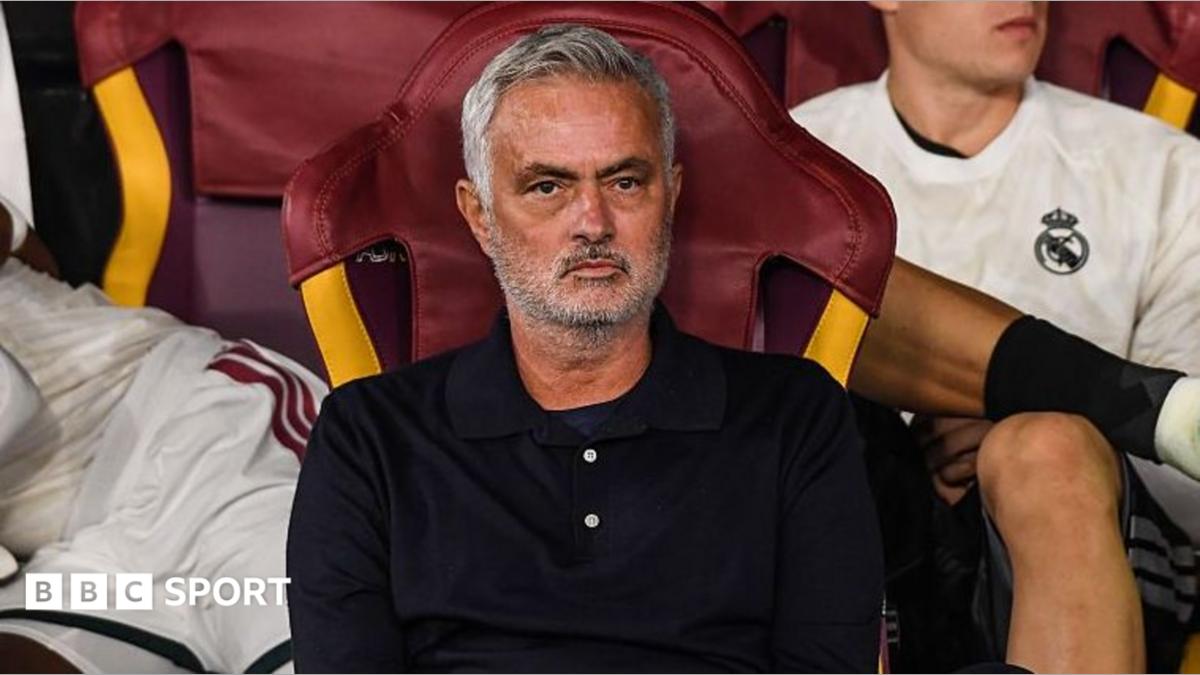
Spanish football was treated to a familiar sight last weekend as Real Madrid secured a 2-1 victory over rivals Barcelona, an outcome that quickly rekindled a long-running Jose Mourinho tactical debate across the continent. Facing a high-stakes Clasico with star winger Vinicius Jr unavailable due to suspension, the Portuguese manager turned to a disciplined 4-4-2 setup to disrupt the league leaders. The strategic display prompted widespread discussion among observers who have tracked his 26-year coaching journey from his initial breakthrough at Benfica to his present return to the Santiago Bernabeu. Rather than relying on rigid patterns of play, the veteran manager showcased an approach built to absorb pressure, embrace instability, and exploit gaps left behind by proactive opposition setups.
Madrid lined up in an organised compact shape, deploying Federico Valverde at right-back while Bernardo Silva joined Aurelien Tchouameni in central midfield. Out wide, Arda Guler and Yan Diomande took up flanking duties, leaving Jude Bellingham to operate in tandem with Kylian Mbappe in attack. A key tactical instruction saw Silva handed the duty of tracking Barcelona midfielder Pedri across the pitch. By shadowing the playmaker closely, Silva disrupted the rhythm of Hansi Flick’s team, sharply limiting the youngster's ability to dictate play from deep areas. At the same time, Bellingham sat slightly deeper than Mbappe, using his physical presence and mobility to assist Tchouameni and Silva in clogging central passing avenues.
The plan also counted on baiting Barcelona’s front-footed press into wide areas before swiftly reversing the direction of play. Recognizing that the Catalan side tended to converge heavily toward the ball, Madrid drew their markers wide before striking into the large pockets of space vacated on the opposite flank. This pattern was visible on moves shifting from right to left, where Marc Cucurella managed to ghost into space behind Lamine Yamal. In the decisive moments, Bellingham wriggled free from a cluster of three opponents trying to win back possession, laying the ball off to Eduardo Camavinga during the passage that yielded the winning goal.
Departing from his customary silence on strategic details during post-match media appearances, the Madrid boss broke habit to outline precisely what unpicked the opposition. He explained to the assembled press that his midfielders made runs from deep positions which Barcelona repeatedly struggled to track. The disclosure felt deliberate, carrying the air of a coach who treats press conferences as a natural extension of the match itself, perhaps offering a blueprint for other sides preparing to face Flick’s high defensive line. By having runners surge into open turf behind the aggressive Catalan backline, Madrid repeatedly punctured the attacking structure that had defined Barcelona's recent run of form.
The triumph has refocused attention on a methodology that stands apart from the dominant coaching trends of the past decade. For several years, widespread praise has gone to tacticians who favour rigid systems, symmetrical team shapes, touchline wingers, and inverted full-backs designed to maximise possession and minimise match disorder. Mourinho, by contrast, remains a proponent of tactical periodisation, an ideology created by Vitor Frade, who worked alongside him and Sir Bobby Robson at Porto in the mid-1990s. The theory merges elements of neuroscience, sociology, psychology, and systems theory, rejecting the idea that fitness, tactics, and mental readiness can be trained in isolation.
Under this methodology, preparation focuses heavily on game-like conditions, with shorter, sharper sessions conducted almost entirely with the football. Rather than seeking complete control over every player's choices, the goal is to equip the squad to react intuitively to fluid match situations. As recent football trends move away from zonal structures toward aggressive man-to-man pressing, matches have become considerably more chaotic, providing an environment where adaptable teams can flourish. By giving individual talents like Mbappe the freedom to stretch lines, Bellingham the platform to drive forward, and Silva the authority to manage tempos under heavy pressure, the Portuguese coach continues to challenge the preference for heavily scripted systems as his side prepares for the remaining challenges of the domestic campaign.